Rome Walks is an English-language company
devoted to helping the busy traveller make
the most out of their visit to the Eternal City
through small group walks and private tours

Wednesday, April 24, 2013

25 APRIL 1945: The Start of a New Beginning for Italy


Liberation Day - La Festa della Liberazione


25 April - Streets in Rome will be closed for parades to celebrate the 68th anniversary of liberation from the Nazis and the end of the Fascist regime.


Women in the Italian Resistance
The date marks the liberation of Milan and Turin, where the partigiani, the Italian resistance movement, aided by a popular insurrection, forced the retreat of the German soldiers.

Just two days later, Italy's fascist dictator Benito Mussolini was captured while attempting to cross the border into Switzerland and executed along with his lover Clara Petacci.


Actress Anna Magnani in "Rome, Open City", 1945


Rome was liberated in June of that year, and in September the film "Rome, Open City" was released in Italian theatres. Filmed on meagre war-time resources, director Roberto Rossellini dramatized the plight of the capital under Nazi occupation.


The Voice of the Italian Resistance


The song "Bella Ciao", derived from a folk song from the 1800s, became a choral emblem of the Italian resistance during the social protests of the 1960s; it has been translated into over thirty languages and sung all over the world as a protest song. 


At this time of year, bright red poppies, a common weed in Italy, begin to sprout up around the ruins and the train tracks. 


A symbol of remembrance in many of the Commonwealth Nations, poppies have been associated with war since they were noted growing on the graves of soldiers and figure in anti-war songs around the world.


Sunday, April 14, 2013

Urban Fauna: Birds and Beasts of Rome


In Rome, A World Hidden Beneath your Feet


University Researcher Fishing for the Freshwater Crab Potamon Fluviatile in Trajan's Forum


The Forum and Market of Emperor Trajan lie in the heart of Rome's centre, bustling with noise, traffic and thousands of visitors everyday. Yet somehow it is home to the city's most surprising animal population: a robust colony of freshwater crabs, potamon fluviatile, which live several meters below the ruins in subterranean tunnels that connect with the cloaca maxima, one of the world's first sewer systems that evolved from the drainage channels first built by the Etruscans in the 7th century BC.


AFP/File Christophe Simon
It is not yet clear how long this population has been thriving in Rome, but they seem to have adapted extraordinarily well to the hostile urban environment, feeding not only on insects but pieces of popcorn and even cigarette butts. The entire colony is affected by gigantism, growing up to twice as large as other members of the same species, which indicates isolation and a long, gradual process of adaptation. 


Potamon Fluviatile

Recent genetic studies link them to a Greek species introduced to Italy 3000 years ago, before the founding of Rome. Or perhaps they escaped from the nearby Forum Pisciarium, the ancient Roman fish market where vendors once hawked these crustaceans that are also known as "the poor man's lobster".


Look Up and Look Out: the Starlings are Coming


Rome at twilight, bathed in rosy, golden light, becomes the scenic backdrop for swarms of starlings that form pulsing, mutating shapes in the air in an enchanting aerial spectacle.


AFP Photo/ Gabriel Buoys


Arriving from Russia and the Baltic countries, the birds first started wintering in Rome around 80 years ago, and show no signs of wanting to leave their second home. Experts debate the exact number, but some estimate that there are 4 starlings for every human inhabitant in the city. 


Starling Murmuration seen from the Palatine Hill at Twilight


The swarming behaviour of a murmuration of starlings serves to distract predators: amazingly, each starling tracks the movements of seven of its neighbours simultaneously to be able to fly in formation with them and make an individual contribution to the swarm as a cohesive force. And all this happens 10 times faster than a human can think.

Don't Park under the Trees


They seem to adore the city lights,  noisy traffic, and smelly bus depots warmed by exhaust fumes.

The results can be devastating. Every night at roosting time, within just a few minutes, a rain of corrosive, malodorous guano covers everything from busy squares near the train station to tree-lined avenues in the outer boroughs. 


Terrorizing Starlings with Audio Devices along the Tiber River

City workers in hazmat suits patrol the targeted areas with special devices that emit a piercing distress call, a technique in use for several years that has met with some degree of success. 


But meanwhile, sit back and enjoy the show.


Thursday, March 28, 2013

Easter Chocolate and Passover Amaretti


 A Very Chocolatey Easter


Italians, especially younger ones, will consume their fair share of chocolate in the coming days, mostly in the form of hollow chocolate eggs containing surprises inside. 


What's inside?
Adorned with ribbons and wrapped in brightly colored Mylar, chocolate eggs are an established rite of Easter-time consumption in Italy. Prices range from 32 to an astonishing 96 euro per kilo, depending on the quality of the chocolate and branding with trademarked gadgets and toys. 


Although big-name brands such as Kinder, Motta, Perugina and Nestlè may top sales, Italy's many artisanal chocolatiers keep up their end and compete on both quality and price. 


Vintage Easter


Presented at the Roman shopping center Euroma 2 in 2009, the Guinness World Record for the Largest Chocolate Egg in Europe was set with an egg 6 meters high made from 2,500 kilos of dark chocolate.


Sales of the chocolate went to earthquake relief for Aquila

Chocolate Trivia: Italians consume an average of 4 kilos of chocolate annually (Great Britain tops the list at 9.5 kilos per head). Dark chocolate is favored over milk chocolate and consumption varies greatly between North and South: 67% is consumed in northern Italy while only 9% in Southern Italy, according to the Association for Italian Chocolate Lovers.


Passover (Pesach) Foods in Italy


The special dietary restrictions observed by Jews during Passover are often inspiration for creativity in the kitchen: A vegetarian lasagna made with matzo instead of egg pasta?  

That is one of ideas suggested on the mouth-watering food blog www.labna.it (mostly in Italian). Their kosher-for-Passover recipe for amaretti (almond cookies), which we've translated to English, came from a treasured notebook handed down from nonna (grandmother).
Amaretti

 AMARETTI DELLA NONNA

  • 300 g  almonds (1 and 1/2 cups ground)
  • 200 g  (7/8 cup) sugar
  • 2 egg whites
Beat egg whites until very stiff; refrigerate. Process almonds until finely ground; mix almonds with sugar. Stir together egg whites with almond mixture to obtain a thick batter. Form into small balls, pressing them down slightly as you set them on a baking sheet covered in baking paper. Bake in a preheated oven at 150° C (300° F)  for roughly 45 minutes, or until dry and crisp. Keep an eye on the oven! Though amaretti  take a long time to bake, they take no time at all to burn, especially on the bottoms.

Sunday, March 24, 2013

Holy Week in Rome

24 March 2013 - Palm Sunday

Palm Sunday at St. Peter's Basilica
 
Newly enthroned Pope Francis I, riding in an open jeep, greeted an adoring crowd of 250,000 waving olive branches in St. Peter's Square this morning. 

Palm Sunday marks the beginning of Holy Week in Rome, the most important holiday in the Christian calendar. 


There will be many opportunities for the faithful to see the new pope: consult the complete list of liturgical celebrations in the Vatican here.


A Centuries-old Tradition Interrupted then Restored in 20th Century


On Good Friday, 29 March, the pope will lead the Way of the Cross at the Colosseum. This tradition dates back over 250 years, when it was instituted by Pope Benedict XIV to celebrate the Jubilee Year of 1750. It was in this year that the Colosseum became consecrated as a holy site in memory of Christian martyrs, and the 14 stations of the cross were installed inside the Roman amphitheater. 

When Rome became the capital of a united Italy in 1870, the stations and cross installed in the center were removed, a sign of the surge of secular, anti-clerical nationalism sweeping Italy at that time. In 1926 during the conciliation between the state and the church, the cross was reintroduced in the position in which it stands today. The Good Friday rite of Way of the Cross at the Colosseum was restored by pope Paul IV in 1964.

Easter Vigil at Saint Praxedes


Pope Paschal I

 
Santa Prassede
One of the most beautiful churches in Rome to observe the Easter Vigil is commonly known as Santa Prassede,  located near St. Mary Major on the Esquiline Hill. Although the church that can be visited today dates back to 780, its origins are even older: according to tradition, one of the first Romans converted by the apostle Paul was the senator Pudens, who in turn converted his two daughters, Pudentiana e Praxedes. All three were matyred under the reign of Emporers Marcus and Antoninus II in 165. 

Here Pope Paschal I is depicted with a square halo, indicating that he was still alive at the time (870).

Pillar of the Flogging
The church contains some of the most stunning examples of medieval mosaics in Rome and a fragment of the alleged pillar upon which Jesus was flogged and tortured before his crucifixion. The pillar is one of relics brought to Rome in the early 4th century by Saint Helena, mother of Emperor Constantine.  


Via di Santa Prassede 9/a / Via San Martino ai Monti.  For more information, contact the church directly 06 48 82 456.


Tuesday, January 15, 2013

Which Walking Tour is Best...for me?


Q&A  - First Timers and Worldly Travelers


I’ve never been to Rome before, and I’m overwhelmed. Where do I start?


One of the best orientations to the city is a stroll through the historical center, with its narrow streets and breathtaking vistas of piazzas, fountains and ruins. But why not put your map away for two hours and let one of our expert, local guides lead the way? Their explanations, stories and helpful tips will make for a relaxing walk that will bring the city to life, taking in not only the major sites of the city center but also a few hidden gems easily missed by the casual tourist.
Campo di Fiori
Pantheon

Join our one of our Twilight Walks, which runs everyday except Mondays and Wednesdays at 5 or 6:00pm  Adults 30 euro, students 25 euro. For more details, visit our website www.romewalks.com.


I’ve seen the Colosseum, the Vatican, and the Pantheon and I want to see something besides Rome’s biggest tourist attractions. Where should I go?


It is practically impossible to run out of fascinating things to do and see in the Eternal City. Rome Walks offers 10 group walks and 19 private walks so that you can continue to discover different facets of the city. You don’t have to be an art-buff to enjoy our For Art’s Sake Walk, but you may end up becoming one after visiting some of the finest works of Renaissance and Baroque art in the world with one of our art historians. These masterpieces are not behind ropes in crowded museums, but are hidden within the walls of quiet churches, each with its own unique and layered history of papal patronage, religious significance and artistic and architectural treasures.

Santa Maria sopra Minerva
Caravaggio - St. Matthew & the Angel
Piazza Sant Ignazio


For Art’s Sake Walk, available on request (minimum 2 people) 3 hours. Adults 65 euro, students 45 euro. For more details or to browse our other walks, visit our website     www.romewalks.com.

3 Things to eat in Rome in Winter


Can You Say TAROCCO?


Three Things to Eat in Winter in Italy


plus Carnival Treats that Come only Once a Year


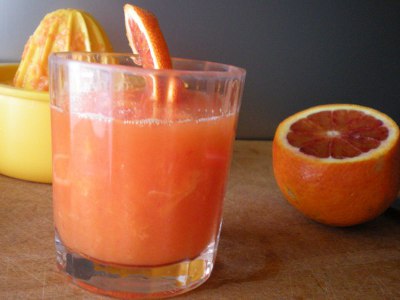
Blood Oranges

Supposedly the orange first arrived on the Italian peninsula in the 17th century, brought back from the East by a Jesuit priest. Today the Tarocco blood orange is the most popular orange in Italy for good reason. Grown in Sicily, it is juicy, seedless, easy to peel and usually sweeter than the more intensely red Moro and Sanguinello varieties. Mounds of brightly colored oranges are the highlight of fruit stalls during the dark winter months. Packed with nutrition, they have more Vitamin C than navel oranges (or “blonds” as the Italians call them), and the flavonoids that contribute their distinctive red hue also provide a sizable dose of the precious antioxidant anthocyanin. Enjoy as a snack, a dessert, freshly squeezed into a pulpy juice that can be ordered at any coffee bar, or try in a Sicilian salad of oranges, sliced bulb fennel, and black roasted olives.


Carciofi alla Giudia

Artichokes

Chilean poet Pablo Neruda once wrote an “Ode to Artichokes” comparing them to armed warriors with tender hearts. Both fall and spring varieties are cultivated in Italy, which boasts the largest production in the world. The Romanesco artichoke, harvested from February to April, is used for succulent, deep-fried “Carciofi alla Giudia”, a classic staple of restaurants in the Jewish Ghetto in Rome. While kitchen hands are busy shucking and cleaning the vegetables in the back,  perfectly stacked pyramids of artichokes set in front of the restaurants advertise the specialty to passers by. Equally delicious are the tender and flavorful “Carciofi alla Romana” braised in broth, olive oil, garlic, parsley and mint. A word of warning: the Italian word for artichoke, “carciofo”, can be used informally to describe a dull, foolish man.


Caldarroste

Chestnuts

Castagnaccio
Although November is the month for the chestnut harvest, in wintertime as well vendors of hot roasted chesnuts can be found all over Rome, selling their toasty wares in paper cones. For many Italians, the appearance of chestnuts in the markets marks the beginning of autumn, and also explains the presence of skillets with holes in kitchenware shops; these curious pans are used to roast le castagne over a fireplace or even on stovetop burners. Because of their rich nutritional content, they have been referred to as “the grain which grows on trees”, and indeed are also dried and ground into chestnut flour, which is used to make Castagnaccio, a savory pudding dressed with pine nuts, raisins, olive oil and rosemary.

Carnival Treats

Frappe
Castagnole
Two of the most common carnival treats in Rome can only be found in period of Carnival in February and are synonymous with cold weather, costumed revellers, parades and confetti.

Frappe, also known as Bugie (lies), Chiacchiere (chatter), or Cenci (rags) are ripply, crispy, flaky sheets of deep-fried dough dusted with powdered sugar or drizzled with chocolate.

Castagnole resemble donut holes:  dense lumps of sweet cake, often flavored with a hint of citrus, that are deep fried or baked, soaked in rum or Alchermes and rolled in granulated sugar.


Tip: when buying sweets in bakeries or pastry shops it is customary to purchase by weight. The most common unit of measurement is the etto, or 100 grams, (plural etti).


Getting Around: Best Deals to and from Rome Airport


NAVIGATING ROME 


The Easiest and Cheapest Ways to Get from the Rome Airport to the City


Until recently, travellers landing in Rome’s main airport in Fiumicino had only two options for getting into the city: train or taxi. But now there are alternatives that could be more convenient. Here are a few insider tips to help you decide.


The Leonardo Express train  runs every half hour to and from Rome’s Termini train station at a cost of 14 euro one-way. 

Although service is guaranteed even during strikes, in November 2012 copper theft (a not uncommon occurrence and frequent contributor to train delays) caused the line to shut down and created chaos for travelers. Another factor to consider, especially for those with lots of luggage, is that this train arrives at a track 500 meters (1/3 mile) from the main train station and connections to taxis and public transport.


Taxis are a convenient, if pricey, way to reach your destination. Rates increased in 2012 and the fixed, all inclusive fare from the airport to central Rome is 48 euro. 


Some taxis may charge less but add on for extra luggage or more than four passengers. This detailed fact sheet  published by the City of Rome can help unravel the idiosyncrasies of Roman taxi fares. (English version on page 2). One phrase that may be puzzling to some travelers is the frequent reference to “inside the Aurelian Walls”. This refers to the the zoning confines of the city center, which are demarcated by the ancient walls (over 65% percent of which are still in place) that once contained the entire city of Rome.
A word of caution: some taxi drivers, both authorized and unauthorized, may try to take advantage of dazed, jet-lagged travellers by quoting higher prices and extra add-ons, and they usually get away with it. Always insist on using the meter in the city, and no ride within the center should cost more than 20 euro. (Average rides are between 6 and 14 euro when taken from a taxi-stand). Tips are appreciated, but not obligatory.


A number of private bus companies now offer non-stop service between Fiumicino and Termini station at a very competitive price, just 4 or 5 euro one-way. 


The buses do not run as frequently as the trains, and take a little longer, depending on traffic (40-55 minutes as compared to 30 minutes by train), they stop at the same place at the airport, making it easy to hop on whichever one is leaving first (tickets can be bought on board). Some of these companies, which are reliable and have been operating for some time, do not have a very searchable online profile (especially in English) so it can be easy to miss the savings. Here are four of them: Terravision, Atral, S.I.T., and T.A.M..All buslines also offer service to and from Ciampino Airport.


Last, but not least, the cheapest door-to-door transport in Rome is AirportShuttle offering transfers at 25 euro for one person and 5-6 euro for each additional person.

At these rates, this service (the only one of its kind in Rome) is one of the best deals going, although you will be riding with a group of other passengers and cannot expect the rapid service of a private taxi.